Research Article
Aim & Scope
International Journal on Lifelong Education and Leadership (IJLEL Journal) is an international, double blind peer-reviewed, non-profit, free of charge, an open-access online journal. IJLEL is a journal that accepts manuscripts related to education, lifelong learning, adult education and leadership. The journal is published online two times in a year (January- June / July-December). IJLEL publishes research employing a variety of qualitative and/or quantitative methods and approaches in all areas of the education and related fields. IJLEL welcomes articles from different institutions and countries related to education field. Publication language is ENGLISH.
International Journal on Lifelong Education and Leadership (IJLEL Journal), the journal of ICLEL CONFERENCES, was established in 2015. The journal publishes high quality articles in the fields of educational policy and practice, and research that links the two. The journal is of interest to academics, researchers and those people concerned with mediating research findings to policy makers and practitioners. The journal is a valuable resource for teachers, counselors, supervisors, administrators, policy makers, curriculum planners, and educational researchers as they consider the structure of tomorrow's educational system.
IJLEL Journal publishes research employing a variety of qualitative and/or quantitative methods and approaches in all areas of the education field. The aim of the journal is to increase understanding of learning and teaching in pre-primary, primary, secondary, higher and adult education, and to contribute to the improvement of educational processes and outcomes. Subjects IJLEL Journal has recently covered include such as;
- The Concept of Lifelong Education-LLE - Lifelong Science/Social Science Education
- Educational Sciences for LLE - Adult Education Programs
- Lifelong Special Education - Teachers’ Education and LLE
- European Union Education Programs - Hobby Education Program
- Senior Citizens' Educations - Lifelong Learning for Mass Education Program
- Equality in Education - Inclusion in LLE
- Curriculum Development for LLE - Comparative Lifelong Experiences
- Lifelong Distance Education - Lifelong Learning Technologies
- Lifelong Language Education - Literacy Development and Lifelong Learning
- Psychology of LLE - Psychological Counselling and Support in LLE
- Internship and Vocational Education - In Service Training in LLE
- Lifelong Sports and Education - NGO Educations for Society
- Multi-Cultural Education - Internationalization in Education
- Citizenship Education - Music and Art Education for Lifelong
- Leadership in Education - Management and Educational Administration
- Human Resource Management - Organizational Behavior
- Globalization and Effects - Organizational Pschology
- Public Adminstration - Project Management for LLE
- Entrepreneurship in Education -Human Relations in Educational Institues
Author Guidelines
IJLEL
General rules
This journal is published two times in each year.
Original manuscripts written in only English are published in this journal.
Manuscripts are published after approving of editorial and advisory boards.
All writers are responsible for the content of the manuscripts.
All writers are responsible to present plagiarism report (rate is max 25%).
No part of this publication may be reproduced or utilized in any form without referring the name of the journal.
All manuscripts should be written in accordance with APA 6 format.
Manuscripts should be prepared according to the journal's template. The manuscripts that are not prepared in accordance with the journal template will not be accepted.
Click here to download the journal template of manuscript and title page.
Manuscripts are written in Cambria font, normal font style, with 10 punto and single line spacing, with just 0nk blanks after paragraphs. Only manuscript title should be Cambria 12 punto.
Manuscripts should not exceed 20 pages.
Title, Author(s), Abstract and Keywords
Manuscript title should be short and clear. The first letter of the manuscript should be in capital letters. The title should consist of at most 20 words.
A space should be given after manuscript title and author(s’) name(s) should be written in bold. After the title author(s’) addresses and emails should be written in italic.
A space should be given after author(s’) information and abstract that should consist of at least 150 words – max 300 words and keywords that should at least three words.
Divisions and Subdivisions
Manuscripts should be composed of Introduction, Method, Findings, Conclusion, Discussion, Suggestions, References.
Tables and Figures
Tables and figures should be prepared in accordance with APA6 rules and placed in the text.
Table title should be placed at the top of the table, while figure titles should be placed under the figure.
You can download the journal format of IJLEL manuscript document and IJLEL title page
Ethical Principles and Publication Policy
Ethical Rules, Publication Policy and Open Access Policy Publication Ethics
· All parties included in the publication process (authors, readers and researchers, publisher, reviewers and editors) carried out by IJLEL comply with the standards of ethical considerations. IJLEL journal applies the guidelines and policies published by the Turkish Council of Higher Education and Committee on Publication Ethics (COPE) on ethical duties and responsibilities.
Ethical Responsibilities of Authors
· The author(s) warrant that the manuscript submitted is his/her/their own original research.
· All participated authors in this work take public responsibility and have approved that the manuscript has not been sent any other journal for publication.
· Review process cannot begin in case of failure or missing any of the requirements mentioned in this journal.
· The submitter must provide and maintain all requirements during the evaluation process.
· It should be made sure that other individuals shown as co-authors have contributed to the research. It is contrary to the scientific ethics to add some, who are not academic contributors to the article, as co-authors or to put in order co-authors with non-academic criteria such as title, age, and gender regardless of the order of contribution.
· It is assumed that authors who submit articles to the journal read and accept the publishing and writing principles of the journal and the writers are deemed to have committed themselves to these principles.
· Citations and bibliography should be complete and realistic.
· Author commits all conditions by sending the manuscript.
· All matter included in the manuscript does not violate any existing copyright rules and any intellectual property rights of any person or entity.
· The manuscript meets ethical standards applicable to the research discipline.
· All peer review publications will be refereed in double-blind review process by at least two reviewers with expertise in the relevant subject area. Book, Software and Website Reviews will not be reviewed, but the editors reserve the right to refuse or edit review.
Plagiarism Policy
· The authors should scan their manuscripts with the plagiarism (such as iThenticate, Turnitin, intihal.net) before submitting the system and maximum rate should not exceed 25%.
Ethical Responsibilities of Editors
The editors of IJLEL should hold the following ethical responsibilities that are based on the guides "COPE Code of Conduct and Best Practice Guidelines for Journal Editors" and "COPE Best Practice Guidelines for Journal Editors" published as open Access by Committee on Publication Ethics (COPE).
General duties and responsibilities
Editors are responsible for each study published in IJLEL. In this respect, the editors have the following roles and responsibilities:
Making efforts to meet the demand for knowledge from readers and authors,
Ensuring the continuous development of the journal,
Managing the procedures aimed to improve the quality of the studies published in the journal,
Supporting freedom of expression,
Ensuring academic integrity,
Following the procedures without making concessions on intellectual property rights and ethical standards,
Being transparent and clear in issues that require correction or explanation.
Relationships with Readers
Editors must make decisions taking into consideration the knowledge, skills and expectations of all readers, researchers and practitioners need. They must also ensure that the published studies contribute to literature and be original. Moreover, they must take notice of the feedback received from researchers and practitioners and provide explanatory and informative feedback.
Relationships with Authors
Editors have the following duties and responsibilities in their relations with authors:
Editors must make positive or negative decisions about the studies' importance, originality, validity, clarity in wording and suitability with the journal's aims and objectives.
Editors must accept the studies that are within the scope of publication into pre review process unless there are serious problems with the study.
Editors must not ignore positive suggestions made by reviewers unless there are serious problems with the study.
New editors, unless there are serious issues, must not change the previous editor's decisions about the studies.
"Blind Review and Review Process" must be published and editors must prevent possible diversions in the defined processes.
Editors must publish an "Writing Rules" that is comprehensive enough in answering queries by authors. This guide must be updated regularly.
Authors should be provided with explanatory and informative feedback.
Relationships with Reviewers
Editors have the following duties and responsibilities in their relations with reviewers:
Editors must
choose reviewers according to the subject of the study.
provide the information and guidance reviewers may need during the review process.
observe whether there are conflicting interests between reviewers and authors.
keep the identities of reviewers confidential in blind review.
encourage the reviewers to review the manuscript in an unbiased, scientific and objective tone.
evaluate reviewers regularly based on criteria like performance and timing.
develop practices and policies that increase the performance of reviewers.
take necessary steps to update the reviewer pool dynamically.
prevent unkind and unscientific reviews.
make effort to ensure the reviewer pool has a wide range.
Relationships with the Editorial Board
Editors must make sure that the members of the editorial board follow the procedures in accordance with the publication policies and guidelines, and must inform the members about the publication policies and developments. The editors must also train new members of the editorial board and provide the information they need.
Moreover, editors must
ensure that the members of the editorial board review the manuscripts in an unbiased and independent manner.
select the new members of the editorial board from those who can contribute to the journal and are qualified enough.
send manuscripts for review based on the subject of expertise of the editorial board members.
regularly communicate with the editorial board.
arrange regular meetings with the editorial board for the development of publication policies and the journal.
Relationships with the Journal's Owner and Publisher
The relationship between the editors and publisher is based on the principle of the independency of editors. All the decisions made by the editors are independent of the publisher and the owner of the journal as required by the agreement made between editors and publisher.
Editorial and Blind Review Processes
Editors are obliged to comply with the policies of "Blind Review and Review Process" stated in the journal's publication policies. Therefore, the editors ensure that each manuscript is reviewed in an unbiased, fair and timely manner.
Quality Assurance
Editors must make sure that articles in the journal are published in accordance with the publication policies of the journal and international standards.
Protection of Personal Information
Editors are supposed to protect the personal information related with the subjects or visuals in the studies being reviewed, and to reject the study if there is no documentation of the subjects' consent. Furthermore, editors are supposed to protect the personal information of the authors, reviewers and readers.
Encouraging Ethical Rules and Protection of Human and Animal Rights
Editors are supposed to protect human and animal rights in the studies being reviewed and must reject the experimental studies which do not have ethical and related committee’s approval about the population given in such studies.
Precautions against possible Abuse and Malpractice
Editors are supposed to take precautions against possible abuse and malpractice. They must conduct investigations meticulously and objectively in determining and evaluating complaints about such situations. They must also share the results of the investigation.
Ensuring Academic Integrity
Editors must make sure that the mistakes, inconsistencies or misdirections in studies are corrected quickly.
Protection of Intellectual Property Rights
Editors are responsible for protecting the intellectual property rights of all the articles published in the journal and the rights of the journal and author(s) in cases where these rights are violated. Also, editors must take the necessary precautions in order to prevent the content of all published articles from violating the intellectual property rights of other publications.
Constructiveness and Openness to Discussion
Editors must pay attention to the convincing criticism about studies published in the journal and must have a constructive attitude towards such criticism.
grant the right of reply to the author(s) of the criticized study.
not ignore or exclude the study that include negative results.
Complaints
Editors must examine the complaints from authors, reviewers or readers and respond to them in an explanatory and enlightening manner.
Political and Economic Apprehensions
Neither the owner of the journal, publisher or any other political or economical factor can influence the independent decision taking of the editors.
Conflicting Interests
Editors, acknowledging that there may be conflicting interests between reviewers and other editors, guarantee that the publication process of the manuscripts will be completed in an independent and unbiased manner
Peer Review Process
Blind review is a method used to make sure scientific publications are produced with the highest quality. This method is fundamental to the objective review of scientific studies and is preferred by many scientific journals. All manuscripts submitted to IJLEL are blind reviewed according to the steps below:
Blind Review Method
IJLEL uses the double blind review method in the review process of all studies. In this method the identities of the authors and reviewers are confidential.
Pre-Review Process
In the pre-review process, first of all, the appropriateness of the study with the journal writing rules is checked and plagiarism check is performed. Authors should submit the plagiarism report (similarity report) of their work together with the submission of the manuscript. Studies without plagiarism report will not be evaluated. If the plagiarism rate of the submitted manuscript except bibliography is below 25% and it is found to be in accordance with the journal writing rules, it is assigned to the relevant field editor. Candidate manuscripts that do not comply with the journal writing rules and do not have plagiarism report are returned to the author by the assistant editors at the latest within one month. While preparing plagiarism report, the bibliography of the manuscript, author names and information about the authors must be removed from the text. A detailed report showing which parts of the report are similar to the sources scanned must be sent, not the screen shot of the report. In addition, while the report is being prepared, the "Extract Bibliography" "Extract citiations" options must be unchecked (off) and the report must be prepared and sent with the option checked (on) "remove less than five word simulations". The corrections requested from the authors at the pre-review process must be sent within 15 days. Otherwise, the study is removed from the evaluation process.
Field Editor Pre-Revies Process
In the field editor pre-review process, the field editors evaluate the introduction and literature, method, findings, results, discussion parts of the studies in detail with respect to the publishing policies and scope of the journal as well as originality. At this stage, the studies which are not related with the journal's aim and scope, weak in terms of language and wording, lack originality, contain critical scientific mistakes and do not meet the publishing criteria are rejected. The authors of such studies are informed in one month following the submission date. The studies deemed acceptable, on the other hand, are forwarded to at least two reviewer related with the subject of study that the work focuses on.
Reviewer Process
The field editors assing at least two reviewers that they deem appropriate according to the content of the study and the referees' field of expertise to evaluate the study.
Reviewers obligated to guarantee that they will not share any document or detail about the study they review.
Reviewer Reports
In general, the reviewer reports are based on the originality of the studies, methods, ethical considerations, consistent presentation of the findings and results and analysis of the studies with respect to literature. This evaluation is done according to the following:
Literature: the reviewer report includes views about the presentation and aims of the problem addressed in the study, the importance of the topic, the gaps in the literature about the topic, the scope of the related literature, the originality and topicality of the study.
Method: the reviewer report includes views about the appropriateness of the research method, sample choice and properties, validity and reliability issues, as well as data collection and data analysis.
Findings: the reviewer report includes views about the presentation of the findings obtained through the method, the accuracy of the analysis methods, the consistency of the aims and findings of the study, the presentation of tables, diagrams and visuals that are needed, and the conceptual evaluation of the scales.
Evaluation and Discussion: the reviewer report includes views about discussions based on findings, suitability with the research question(s) and hypothesis(ses), generalizability and applicability.
Results and Suggestions: the reviewer report includes views about contribution to literature, recommendations for future studies and suggestions about applications in the field.
Style and Wording: the reviewer report includes views about whether the title comprises the content of the study, whether the Turkish language is used accurately and whether APA6 rules are observed in giving references and in-text references in parallel with the language of the full text.
In the review process, reviewers are not expected to redact the study according to its galley features.
Reviewing Process
Reviewers are given 5 weeks for review. Referees who do not return during this period are given an additional 2 weeks. At the end of this additional period, if there is no return from the reviewer, the field editor is requested to assing another reviewer. It is compulsory for the authors to complete the editing of their work within 1 month according. The manuscripts that are not sent within the specified period are rejected. Reviewers may ask multiple editing of a study if they deem necessary.
Review Results
The editor evaluates the review by reviewers within 4 weeks at the latest and as a result of this evaluation the field editor informs the editorial board about his/her final decision regarding the study.
Editorial Board Decision
Based on the review done by the field editor and reviewers, editors report the views of the editorial board to the author(s) in two weeks at the latest along with the suggestions made by the field editor and reviewers. In this process the studies that are not accepted for publication are returned to author(s). The final decision about the accepted studies is made based on the results of the plagiarism detection report by editorial boardi
How long does the Publication Review Process last?
It is anticipated that the publication review process of the studies submitted to IJLEL be completed in about 16 weeks if pre-review complated. However, the period during which editors or reviewers ask the author(s) to do editing and the author(s) complete the editing is not included in this time frame.
Open Access Policy
IJLEL journal provides immediate open access to its content, on the principle that making research freely available to the public supports a greater global exchange of knowledge.
IJLEL is licensed under Creative Commons Attribution-NonCommercial 4.0 International License.
IJLEL applies the Budapest Open Access Declarition as a principle. In this context, The Budapest Open Access declares that:
An old tradition and a new technology have converged to make possible an unprecedented public good. The old tradition is the willingness of scientists and scholars to publish the fruits of their research in scholarly journals without payment, for the sake of inquiry and knowledge. The new technology is the internet. The public good they make possible is the world-wide electronic distribution of the peer-reviewed journal literature and completely free and unrestricted access to it by all scientists, scholars, teachers, students, and other curious minds. Removing access barriers to this literature will accelerate research, enrich education, share the learning of the rich with the poor and the poor with the rich, make this literature as useful as it can be, and lay the foundation for uniting humanity in a common intellectual conversation and quest for knowledge.
For various reasons, this kind of free and unrestricted online availability, which we will call open access, has so far been limited to small portions of the journal literature. But even in these limited collections, many different initiatives have shown that open access is economically feasible, that it gives readers extraordinary power to find and make use of relevant literature, and that it gives authors and their works vast and measurable new visibility, readership, and impact. To secure these benefits for all, we call on all interested institutions and individuals to help open up access to the rest of this literature and remove the barriers, especially the price barriers, that stand in the way. The more who join the effort to advance this cause, the sooner we will all enjoy the benefits of open access.
The literature that should be freely accessible online is that which scholars give to the world without expectation of payment. Primarily, this category encompasses their peer-reviewed journal articles, but it also includes any unreviewed preprints that they might wish to put online for comment or to alert colleagues to important research findings. There are many degrees and kinds of wider and easier access to this literature. By "open access" to this literature, we mean its free availability on the public internet, permitting any users to read, download, copy, distribute, print, search, or link to the full texts of these articles, crawl them for indexing, pass them as data to software, or use them for any other lawful purpose, without financial, legal, or technical barriers other than those inseparable from gaining access to the internet itself. The only constraint on reproduction and distribution, and the only role for copyright in this domain, should be to give authors control over the integrity of their work and the right to be properly acknowledged and cited.
While the peer-reviewed journal literature should be accessible online without cost to readers, it is not costless to produce. However, experiments show that the overall costs of providing open access to this literature are far lower than the costs of traditional forms of dissemination. With such an opportunity to save money and expand the scope of dissemination at the same time, there is today a strong incentive for professional associations, universities, libraries, foundations, and others to embrace open access as a means of advancing their missions. Achieving open access will require new cost recovery models and financing mechanisms, but the significantly lower overall cost of dissemination is a reason to be confident that the goal is attainable and not merely preferable or utopian.
To achieve open access to scholarly journal literature, we recommend two complementary strategies.
I. Self-Archiving: First, scholars need the tools and assistance to deposit their refereed journal articles in open electronic archives, a practice commonly called, self-archiving. When these archives conform to standards created by the Open Archives Initiative, then search engines and other tools can treat the separate archives as one. Users then need not know which archives exist or where they are located in order to find and make use of their contents.
II. Open-access Journals: Second, scholars need the means to launch a new generation of journals committed to open access, and to help existing journals that elect to make the transition to open access. Because journal articles should be disseminated as widely as possible, these new journals will no longer invoke copyright to restrict access to and use of the material they publish. Instead they will use copyright and other tools to ensure permanent open access to all the articles they publish. Because price is a barrier to access, these new journals will not charge subscription or access fees, and will turn to other methods for covering their expenses. There are many alternative sources of funds for this purpose, including the foundations and governments that fund research, the universities and laboratories that employ researchers, endowments set up by discipline or institution, friends of the cause of open access, profits from the sale of add-ons to the basic texts, funds freed up by the demise or cancellation of journals charging traditional subscription or access fees, or even contributions from the researchers themselves. There is no need to favor one of these solutions over the others for all disciplines or nations, and no need to stop looking for other, creative alternatives.
Open access to peer-reviewed journal literature is the goal. Self-archiving (I.) and a new generation of open-access journals (II.) are the ways to attain this goal. They are not only direct and effective means to this end, they are within the reach of scholars themselves, immediately, and need not wait on changes brought about by markets or legislation. While we endorse the two strategies just outlined, we also encourage experimentation with further ways to make the transition from the present methods of dissemination to open access. Flexibility, experimentation, and adaptation to local circumstances are the best ways to assure that progress in diverse settings will be rapid, secure, and long-lived.
The Open Society Institute, the foundation network founded by philanthropist George Soros, is committed to providing initial help and funding to realize this goal. It will use its resources and influence to extend and promote institutional self-archiving, to launch new open-access journals, and to help an open-access journal system become economically self-sustaining. While the Open Society Institute's commitment and resources are substantial, this initiative is very much in need of other organizations to lend their effort and resources.
We invite governments, universities, libraries, journal editors, publishers, foundations, learned societies, professional associations, and individual scholars who share our vision to join us in the task of removing the barriers to open access and building a future in which research and education in every part of the world are that much more free to flourish.
February 14, 2002
Budapest, Hungary
Leslie Chan: Bioline International
Darius Cuplinskas: Director, Information Program, Open Society Institute
Michael Eisen: Public Library of Science
Fred Friend: Director Scholarly Communication, University College London
Yana Genova: Next Page Foundation
Jean-Claude Guédon: University of Montreal
Melissa Hagemann: Program Officer, Information Program, Open Society Institute
Stevan Harnad: Professor of Cognitive Science, University of Southampton, Universite du Quebec a Montreal
Rick Johnson: Director, Scholarly Publishing and Academic Resources Coalition (SPARC)
Rima Kupryte: Open Society Institute
Manfredi La Manna: Electronic Society for Social Scientists
István Rév: Open Society Institute, Open Society Archives
Monika Segbert: eIFL Project consultant
Sidnei de Souza: Informatics Director at CRIA, Bioline International
Peter Suber: Professor of Philosophy, Earlham College & The Free Online Scholarship Newsletter
Jan Velterop: Publisher, BioMed Central
Price Policy
IJLEL Journal does not require any charge for publication. It is a non-profit, free of charge, an open-access online journal.
Indexes







Journal Boards
Editor in Chief
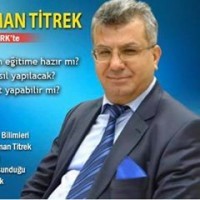
He was born in Enez- Edirne -Turkey at 1972.
He graduate from Ankara University Educational Science Faculty-1993
He got master degree from Ankara University- 1999
He got PhD from Ankara University - 2004
He studied at Western Michigan University-USA- 2007 / 2008
He became Asst. Prof. in Sakarya University-2005
He got Assoc. title from Hacettepe University- 2011
He became Assoc. Prof. Dr. at 2011
He appointed as Profesor at 2017.
He coordinated 3 EU projects (www.womenlead.sakarya.edu.tr, www.detice.sakarya.edu.tr,www.usdec2014.sakarya.edu.tr) and now he is coordinating EU Ka 203 project: www.beyondthelimitsproject.sakarya.edu.tr
He was the best Social Scientist in Sakarya Universty 2011
He got best performance awards in Sakarya Universty- 2012, 2013and 2014.
He is president of International Conferences on Lifelong Education and Leadership for ALL- ICLEL CONFERENCES (www.iclel.com) and he is Editor in Chief at IJLEL JOURNAL: www.dergipark.org.tr/pub/ijlel https://otitrek.sakarya.edu.tr/
He is also serving as Guest Editor the journals indexed in SSCI.
Co-Editors


Pāvels Jurs is a professor and leading researcher at the Centre for Pedagogy and Social Work, Liepāja Academy of Riga Technical University (Latvia). In 2016, he earned his PhD from the University of Liepāja, successfully defending his dissertation titled “Promoting Youth Civic Engagement in the Pedagogical Process.”
His research interests include:
• youth civic engagement and its significance in shaping future society;
• the professional development of educators, with a focus on the interrelationships between teaching and learning processes;
• the evaluation of historical processes and their influence on contemporary contexts.
Prof. Pāvels Jurs is the author or co-author of numerous scientific publications, monographs, books, and methodological resources. He has also participated in several national and international research projects, and a reviewer for several international scientific journals.
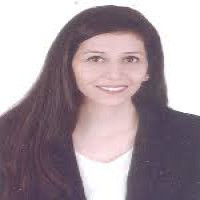
She is Assoc. Prof. Dr. in the Department of Educational Sciences at Sakarya University Education Faculty. She eraned her PhD and associate professor degrees in the field of Educational Administration and Supervision. Her academic interests consist of sustainable development and education, teacher training, organizational psychology, sustainability, organizational resilience, technology in administration, women leadership, work engagement, entrepreneurship, lifelong education, micro-credentials. She has got more than 100 publications such as articles, books, etc. Some of her courses at graduate and undergraduate level consist of Sustainability in Education, ICT in Education, School Development, Classroom Management, Comparative Education, Contemporary Approaches in Educational Management, etc. She has experiences as co-coordinator and researcher in seven European Projects on quality education, empowering prospective teachers, decreasing inequalities. She has been the coordinator in 10 international conferences, and also the editor of two journals. She has experiences in different managerial positions such as co-head of department, deputy manager of research center, co-coordinatorship on sustainability etc. She is also the coordinator of the first micro-credential program for HEI students in Turkey.
Statistics Editor

Language Editors
Journal Secreteriat
IJLEL EDITORIAL BOARD

Eugene Kennedy is a professor of Educational Research in the School of Education at Louisiana State University. His areas of specialization are applied statistics and educational accountability.

He was born in 1972 in Enez District of Edirne, he attended primary and secondary school in his village and high school in Tekirdağ. In 1989, he graduated from Ankara University, Faculty of Educational Sciences, Educational Administration and Planning undergraduate program in 1993. Afterwards, he worked as a teacher first in Erzurum and then in Ankara. During this period, he completed his master's degree in 1999 and received his master's degree from Ankara University Institute of Social Sciences. In 2000, he started to work as a research assistant at Sakarya University Faculty of Education. He worked as a research assistant at Ankara University Faculty of Educational Sciences between 2022-2004 and received his doctorate degree in Educational Administration from Ankara University Institute of Educational Sciences in 2004. In 2005, he was appointed as an assistant professor at Sakarya University Faculty of Education. In 2007-2008 academic year, she worked as a visiting professor at Western Michigan University in the USA. He received the titles of Associate Professor in 2011 and Prof. in 2017 at Sakarya University Faculty of Education and still continues to work at this university.

Associate Prof. Dr. Mirzana Pašić Kodrić is a Bosnian-Herzegovinian literature historian, literary critic and writer. She teaches literature at the University of Sarajevo, Faculty of Education and Bosnian language as a second /foreign language at the International University of Sarajevo. She is Head of the Department of Elementary Class Education, University of Sarajevo, Faculty of Education. For several years she taught Bosnian, Croatian and Serbian Language and Culture at the University of Arizona (USA), where she was the director of the Sarajevo Summer School of Bosnian, Croatian, Serbian Language and Culture.
She is the author of many international literary and research books and she is interested in children’s literature, cultural studies, travelogues and travel literature, and intercultural and gender aspects in literature. Her poetry is translated into English, Turkish, Arabic… and as a writer she received many international literary awards.
Mirzana Pašić Kodrić is a member of the BiH Association of Writers, Croatian writers club Kultura Snova, Zagreb, World Literature India, etc.

Dr. Mehmet Küçük works extensively in science education and primarily teaches undergraduate and graduate courses on subject education and research methods at the faculty. He has conducted numerous projects supported by TÜBİTAK and BAP. Dr. Küçük, who has supervised many graduate students, has over 100 academic works in science education. Dr. Mehmet Küçük is currently serving as a faculty member in the field of science education at Recep Tayyip Erdoğan University in Türkiye. His teaching and research efforts continue to contribute significantly to the academic community.
Dr. Aydın Balyer is a professor in the field of Educational Administration at the Department of Educational Sciences at Yıldız Technical University. His research interest focuses on school leaders, principals, their professional development and working conditions. He also studies on educational policies especially diversity management in their schools.
Dr. Elkatmış was born in 1976 in Nevşehir, Turkey. After completing his primary, middle, and high school education in Nevşehir, he enrolled in the Classroom Teaching Department of Gazi University, Kırşehir Faculty of Education, in 1995. Following his four-year undergraduate education, he earned the title of "Master of Science" in 2002 from Hacettepe University, Graduate School of Social Sciences, Department of Educational Sciences, Curriculum and Instruction. In 2007, he received his "Doctor of Philosophy" degree from Gazi University, Graduate School of Educational Sciences, Department of Elementary Education, Classroom Teaching Program. Between 2015 and 2016, he conducted postdoctoral research as a "Visiting Scholar" at Kent State University in the United States.
Dr. Elkatmış began his professional career in 1999 as a classroom teacher at Yiğitli Primary School in Çubuk, Ankara. From 2000 to 2008, he worked at the Turkish Grand National Assembly (TBMM). Currently, he is a faculty member at Kırıkkale University, Faculty of Education, Department of Elementary Education, Classroom Teaching Program.
His professional interests include Human Rights and Democracy Education, Turkish Language Teaching, and Writing Education with Artificial Intelligence Tools. Additionally, he has a personal interest in the Art of Oratory.
Dr. Elkatmış is married and has one child.
-Born at OPorto, Paranhos, 1960.11.15
-Academic and professional degrees
2008: Doctorate (PhD) in Education Sciences, speciality of Philosophy of Education, by Coimbra University.
Thesis title: Education and media culture: Analysis of un-educative practices (published by Âncora/CEI)
Directors: João José S.M.Boavida, António Simões; Committee: Angel Garcia del Dujo, Manuel Pinto, Maria das Dores Formosinho, Manuel Alte da Veiga, João Boavida, António Simões, Ana Paula Relvas
Classification: Praise and Distinction
1998-1996: Attendance of the curricular part of the Doctoral Programme in “Comunicación y Pluralismo”, Salamanca Pontifical University; seventeen subjects: 31 ECTS;
1998: Specialized Trainer for Educational Technology and Communication (B15), Specialized Didactics (Philosophy – C05) by the Portuguese Scientific-pedagogical Council for In-service Training.
1996: Master in Education Sciences, by Coimbra University
Thesis title: Advertising’s (un)educative value (published IUC)
Director: João José S.M.Boavida
Committee: Maria das Dores Formosinho Sanches Simões, António Moderno, João José S.M.Boavida
Classification: Very Good
1995: Specialized trainer for Practical and Pedagogical Research and Specialized Didactics (Philosophy) by the Portuguese Scientific-pedagogical Council for In-service Training;
1991: Graduation in Teaching of Philosophy, Coimbra University.
1989: Graduation in Philosophy, Oporto University.
-Academic career
At Coimbra University
Faculty of Psychology and Education Sciences
Auxiliary Professor since 9.2.2015
At Guarda Polytechnic Institute (IPG), Portugal
Coordinator Professor since 2013.08.01 up to 8.2.2015; Scientific area of Education Sciences, speciality Philosophy of Education;
Adjunct Professor (tenure) since 2000.11.29 up to 2013.08.01; Scientific area of Education Sciences, speciality of Educational Psychology and/or Pedagogical Psychology; provisional appointment between 1997.11.29 and 2000.11.28; Scientific area of Education Sciences, speciality of Educational Psychology and/or Pedagogical Psychology;
Assistant (2nd triennium) between 1994.10.14 and 1997.11.28; (1st triennium) between 1991.10.14 and 1994.10.13; Scientific area of Education Sciences, Teacher Education
-At other Higher Education Institutions
Invited Lecturer (November, 2015), Liepaja University, Latvia, PhD Course on Pedagogy
Invited lecturer (2009-2010), Universidade Lusófona do Porto, Master Course on Psychology of Education, Education Social Psychology;
Invited lecturer (2009-2010), Universidade de Coimbra, Master Course on Education and the Knowledge Society, Knowledge Society Multidisciplinary analysis I;
Invited lecturer (2009-2010), Universidade de Coimbra, Master Course on Education and the Knowledge Society, Knowledge Society Multidisciplinary analysis II;
Invited lecturer (2008-2009), Universidade Lusíada, Post-graduation course on Education, Inclusion and Special Needs, Science Research Methodology;
Invited lecturer (2008-2009), Universidade de Coimbra, Master Course on Education and the Knowledge Society, Themes and Problematics of Contemporary Education;
-Awards
1989: Award Eng.º António de Almeida for the best graduation in Philosophy by Porto University.
- Scholar and management activities
Director; School of Education, Communication and Sports of Guarda Polytechnic (IPG); 8/10/2010 up to January 2014; 19/2/2009-7/10/2010
Member; Council for Evaluation and Quality IPG; 30/09/2009 up to up to January 2014
Coordinator; Library of IPG; 14/04/2009 up to January 2014
Member; Board Coordination IPG; 19/02/2009; Up to January 2014
Member; Coordinating Council for the Evaluation of IPG; 19/02/2009 up to January 2014
Vice-President; Scientific Council ESEG; 2000-2002
Secretary; Scientific Council ESEG; 2000/02-2000/11
Member; Advisory Board ESECD IPG; 1996-1997
Member; Assembly of Representatives ESEG IPG; 1995-1997
Member; General Assembly of the IPG; 1995-1997
Director; Master Course of Basic Education 1st 2nd Cycles Teaching – ESECD-IPG; 04/11/2010 up to January 2014
Coordinator; Education Sciences Disciplinary Area; 2009-2012
Director; Department of Psychology and Educational Sciences ESEG-IPG; 2007-2009; 2004-2007
Departmental Coordinator; ERASMUS mobilities; 2007-2009
Coordinator; Graduation Course of Basic Education 1st Cycle Teachers – ESEG-IPG; 2004-2009
Pedagogical Coordinator; Courses of Higher Specialized Studies – ESEG-IPG; 1999-2001
Pedagogical Coordinator; Complementary Training Courses for Early Childhood Educators and Basic Education 1st Cycle Teachers – ESEG-IPG; 1999-2000
Coordinator; Bachelor Course of Communication and Public Relations – ESEG-IP; 1995-1997; 1993-1995
Member; Scientific Council of ESEG/ Conselho Técnico-Científico da ESECD; 1997/12 up to February 2014
Member; Scientific Council of UDI; Formação; up to February 2014
Member; Permanent Board of UDI; Formação; up to February 2014
Member; Pedagogical Council of ESEG; 2002-2005; 1996-998






Professor in the field of Mathematics Education at Polytechnic of Guarda (IPG);
Post-Doc in Problem-solving Skills at Kindergarten (Institute of Education, Faculty of Education, Sakarya University, Turkey);
PhD in Science and Technology - specialization in Didactical Mathematics (UTAD University, Vila-Real);
Master's degree in Mathematics Education ( UBI University - Covilhã);
Degree in Mathematics Education (Faculty of Education, Coimbra University);
Coordinator of Center for Studies in Education and Innovation (CI&DEI - Guarda Section - https://www.ipv.pt/cidei/coord.htm) from December 2018;
Dean of HEI - School of Education, Communication and Sport, Polytechnic of Guarda, from 12/01/2015 until 14/01/2019;
Member of the Executive Commission of CEI - (Centro de Estudos Ibéricos - http://www.cei.pt/cei/estrutura.htm) from 12/01/2015 until 14/01/2019;
Member of the board of UDI (Research Unit for Inland Development - http://www.ipg.pt/udi/) from 02/2012 until 12/2014;
Develops research in mathematics education, ICT, multicultural education, pre-school and primary school education, and inclusion and innovation.
Has several scientific publications and designed activities with different HEI from Spain, Italy, Greece, Turkey, Sweden, Ireland, Denmark, Lithuania, Latvia, Romania, Czech Republic, Hungary, Belgium, Germany, Albania, Uzbekistan, Chile, Brazil, Colombia, Mexico, Costa Rica, Peru among others
He is an evaluator for ERASMUS+ Portuguese Agency and European COST projects.
Dr. Stephen Harmon serves as the Executive Director of the Center for 21st Century Universities (C21U), Associate Dean of Research in the College of Lifetime Learning, as a Professor in the Georgia Tech College of Design, and as Managing Director of GT Atrium, LLC. In these roles, he leads the invention, prototyping, validation, and implementation efforts associated with educational innovation and with strategic planning for the future of higher education.
His previous position was Professor and Chair of the Learning Technologies Division in the College of Education and Human Development at Georgia State University. He is a member of the executive committee of the National AI Institute for Adult Learning and Online Education; a member of the leadership council of the Digital Credentials Consortium; and a member of the 1EdTech Higher Education Institutional Leadership Board.
After majoring in English literature at Furman University, Dr. Harmon moved to Upper Egypt to teach fourth-grade English for two years. While traveling through the Middle East and Africa, he realized the tremendous need, and scarce resources, for education and training in developing countries. He returned to the U.S. and earned a masters and doctorate in instructional technology, with a cognate in global policy studies, from the University of Georgia.
Dr. Harmon’s research centers on educational uses of emerging technologies and has, for the last few years, focused on the changing dynamics of higher education, particularly with respect to AI and Lifetime Learning. He is a past president of the Association of Educational Communications and Technology, an international professional association of thousands of educators and others whose activities are directed toward improving instruction through technology. Dr. Harmon has over 200 professional publications and presentations and is past recipient of Georgia State University’s Innovative Instruction Award. He was a commencement speaker at Georgia Southern University and was a recipient of the 2022 University Professional Continuing Education Associate Research & Scholarship Award, the 2024 1EdTech Power Learner Potential Award, and the2025 UPCEA Research and Scholarship Association Award.

I work at the Faculty of Social Sciences, University of Warmia and Mazury in Olsztyn (Poland). I do research in special education and disability studies: psychosocial situations of families of persons with disabilities, siblings of people with intellectual disability, relationships of adults with intellectual disability, participatory research, and self-determination of people with ID.

Professor in Education Sciences, Leading Researcher.
Born in 1986, I began my academic career in 2013 as a research assistant. In 2016, I defended my doctoral dissertation titled "Promoting Civic Engagement Among Youth in the Pedagogical Process." My passion for education and research led me to a professorship in Education Sciences, specializing in School Pedagogy, in 2020. In 2022, I was appointed as a leading researcher in the field.
Over the past six years, I have authored 35 publications, contributing significantly to the academic community. I also have extensive experience in reviewing scholarly works and teaching courses in an international environment, further enhancing my expertise and global perspective on education.
In addition to my academic work, I serve as the Director of Liepājas Dzintara Secondary School, where I combine leadership with my commitment to educational excellence.
My professional qualifications include being a History and Social Science teacher, which complements my broader focus on educational theory and practice.
 Web
Web
Prof.Dr.Bülent GÜVEN completed his undergraduate education at Çanakkale Onsekiz Mart University, Faculty of Education as the first in the university and faculty. He completed his postgraduate education in the field of Educational Programs and Teaching under the Institute of Social Sciences of the same University in 1999. He completed his doctoral studies at Eskişehir Anadolu University in 2003. Prof.Dr. who started to work as a faculty member at Çanakkale Onsekiz Mart University. Güven is still working as a faculty member at the same university. He has carried out observation, lecture and research collaborations in various universities in Turkey and abroad. Dr. Güven is also the EPDAD evaluator authorized by YÖK for the Accreditation of Faculties of Education. In addition to bringing Local Literacy Skills to international and national literature, he has written numerous articles, book chapters and papers presented in international and national congresses on Life Science, Social Studies Teaching, learning styles.

Prof. Dr. Necati CEMALOĞLU, 1965 yılında Kastamonu’da doğdu. 1983–1984 eğitim – öğretim yılında Gazi Üniversitesi, Kastamonu Eğitim Yüksekokulu’ndan mezun oldu. Trabzon ve Ankara’da öğretmenlik ve okul müdürlüğü yaptı. Öğretmenlik yaptığı dönemlerde, Hacettepe Üniversitesi, Eğitim Fakültesi, Eğitim Yönetimi, Teftişi, Planlaması ve Ekonomisi anabilim dalından 1992-1993 eğitim-öğretim yılında mezun oldu. MEB Talim ve Terbiye Kurulu Başkanlığı'nda, matematik komisyonu üyeliği ve maarif müfettişliği yaptı. Ankara ve Gazi Üniversitesi’nde "Eğitim Yönetimi" alanında master yapan Cemaloğlu, Gazi Üniversitesi, Gazi Eğitim Fakültesi’ne araştırma görevlisi olarak göreve başladı. Doktora eğitiminden sonra 2004 yılında yardımcı doçent, 2008 yılında doçent ve 2014 yılında profesör olarak atandı.
Amerika Birleşik Devleti'nde "Michigan State University" ve University of Florida’ya misafir öğretim üyesi statüsüyle gitti. MEB - Dünya Bankası - Kurumsal Performans Yönetimi Ulusal Danışmanı, MEB - TÜBİTAK, e-denetim - e-performans Ulusal Danışmanı, değişik bakanlıklarda ve üniversitelerde stratejik plan danışmanlığı yaptı. Cemaloğlu, yılda 100'ün üzerinde eğitim, yönetim, liderlik ve denetim üzerine konferans vermektedir.
Yayımlanmış 32 kitabı, kitaplarda bölümü, 500’ün üzerinde ulusal gazete makalesi, SSCI ve diğer indexlerde taranan 112 makalesi, katıldığı ulusal ve uluslar arası kongre - sempozyum bulunmaktadır. Evli ve iki çocuk babası olan Cemaloğlu, İngilizce bilmekte ve halen Gazi Üniversitesi, Gazi Eğitim Fakültesi'nde, Eğitim Yönetimi anabilim dalında görev yapmaktadır. Cemaloğlu, 2019 yılında “Başöğretmen Onur Ödülü”, “2020 Yılında Bilge Tonyukuk Eğitime Hizmet Ödülü” almıştır.
Rick Ginsberg, Ph.D., has served as Dean of the School of Education at the University of Kansas since August, 2005. He previously was Director of the School of Education at Colorado State University from 1995-2005. He currently serves as a co-chair of the Learn Coalition which promotes increased research funding for education, and co-chair of the Global Education Deans Forum, a group of Education Deans from research universities across the world who meet to learn, advocate, and work to transform education. He previously was on and served as chair of the Kansas Professional Standards Board, served on the Kansas Continuing Legal Education Commission, the Board of Directors and former chair of the American Association of Colleges of Teacher Education (AACTE), and on the Board of Directors of the Council for Council for the Accreditation of Educator Preparation (CAEP). He chaired the 2022-2023 KS Board of Regents Educator Work Force Task Force. In 2019 he co-chaired the Kansas Department of Education Blue Ribbon Task Force on Bullying. His research focuses on individual/organizational success and educational politics/reform. His most recent book, “Duck and Cover: Confronting and correcting dubious practices in education,” (Teachers College Press, 2023), examines education policies that persist and need to change, calling for reimagining education. Dr. Ginsberg was the 2019 co-recipient of Jerome Neuner Award for Excellence in Publication from the American Association of University Administrators. He received his Ph.D. from the University of Chicago in Administrative, Institutional, and Policy Studies in Education.
My research brings critical and comparative perspectives to the study and practice of internationalization, women studies, migration, sustainability in HE and LLP.
Chutinon Putthiwanit (劉明星) is an Assistant Professor at Kasetsart University, Sakon Nakhon Campus, Thailand. Putthiwanit is a PhD Candidate in Management Science from Turiba University, Latvia; MBA in International Business from Providence University, Republic of China; and BS in Applied Statistics from Assumption University, Thailand. He also was an exchange student at Goethe-Gymnasium, Germany by the support of AFS and Stiftung Mercator. He is a member of Thailand’s Association of Researchers. He has taught partial courses at Providence University, Republic of China; Turiba University, Latvia; and Mykolas Romeris University, Lithuania; and has been invited speaker. He has published research papers in refereed journals and in conferences (one paper in Asian World Trade Organization Network Conference). His case study research published by the National Institute of Development Administration. He can be contacted at Chutinon.p@ku.th.
Lisans eğitimini İnönü Üniversitesi Eğitim Fakültesi Eğitim Bilimleri Bölümü Eğitim Programları ve Öğretim Anabilim Dalında 1997 yılında bitirdi.
Yüksek Lisansını Eskişehir Osmangazi Üniversitesi Eğitim Bilimleri Anabilim Dalında 2000 yılında bitirdi. Doktora öğrenimini Marmara üniversitesi Eğitim Bilimleri Enstitüsü'nde Okul Öncesi Eğitim Öğretmenliği Bilim Dalında 2007 yılında başarı ile bitirdi. Halen Sakarya Üniversitesi Eğitim Fakültesi Okul Öncesi Eğitim Anabilim Dalında görev yapmaktadır.
(Prof. Dr.) Amasya University
Web
Lisans eğitimini Akdeniz Üniversitesi Fen Fakültesi Matematik Bölümü'nde tamamladı. Milli Eğitim Bakanlığına bağlı olarak beş yıl öğretmenlik yaptı. Daha sonra yüksek lisans eğitimini 2002 yılında "İlköğretim Yedinci ve Sekizinci Sınıf Öğrencilerinin Problem Çözme Stratejilerini Kullanabilme Düzeyleri Üzerine Bir Çalışma başlıklı tezi ile tamamlamış ve 2007 yılında "İlköğretim Öğrencilerinde Muhakeme Etme ve İspatlama Düşüncesinin Gelişimi" başlıklı tezi ile doktor unvanını Uludağ Üniversitesi Sosyal Bilimler Enstitüsü'ne bağlı olarak matematik eğitimi alanında almıştır. Meslek yaşamına 2000-2008 yılları arasında Uludağ Üniversitesi Eğitim Fakültesinde devam etti. 2008-2020 yılları arasında İstanbul Üniversitesi Hasan Ali Yücel Eğitim Fakültesinde öğretim üyesi olan Çiğdem Arslan, halen Bursa Uludağ Üniversitesi Matematik Eğitimi Ana Bilim Dalında profesör olarak görev yapmaktadır. Yazarın ulusal/uluslararası düzeyde problem çözme, problem kurma, geometri öğretimi, matematiksel düşünme, matematik kaygısı, matematiksel muhakeme, matematik okuryazarlığı gibi alanlarda farklı dergilerde basılmış makaleleri ve bildirileri, ayrıca problem çözme, problem kurma, matematiksel muhakeme, matematik okuryazarlığı ve matematik kaygısı başta olmak üzere yardımcı araştırmacı ve yürütücü olarak görev aldığı çeşitli projeleri vardır.

https://ssjalangirlscollege.org.in/education.php
I am a associate professor in education working in a college under University of Calcutta for the last 23 years with 49 publications international and national. I have a PhD in Psychology and my PhD thesis has been published by Lambert Publishers, Germany.
Orta Doğu Tekink Üniversitesinde Matematik Öğretmenliği bölümünü bitirdim. Yüksek lisans ve doktora eğitimlerimi Eğitim Teknolojileri ve Eğitim Psikolojisi üzerine yaptım. Doçentliğimi Eğitim Programları ve Öğretim alanında aldım. Halen Eğitim Programları ve Öğretim alanında akademik kariyerime devam etmekteyim.
José Gijón Puerta is Associate Professor in the Department of Didactics and School Organization at the University of Granada.
He has a degree in Biology, a master's degree in Paleoanthropology-Human Evolution and a PhD in Pedagogy. He is member of the research group at the University of Granada Laboratory for Cognition, Health, Training and Interaction among Humans, Animals and Machines. He also currently directs the R+D+i Project National Research Plan Code PID2021-128774OB-I00 «Effects of the application of a dog-assisted activities program (AAP) on academic stress levels in university students»
Akdeniz Üniversitesi Turizm Fakültesinde çalışmaktayım. Akademik ilgi ve araştırma alanlarım, turizm eğitimi, örgütsel davranış, çalışan ve müşteri memnuniyeti, erişilebilir turizm, sürdürülebilir turizm ve turizm ve otel işletmeciliği alanlarıdır.
She is Assoc. Prof. Dr. in the Department of Educational Sciences at Sakarya University Education Faculty. She eraned her PhD and associate professor degrees in the field of Educational Administration and Supervision. Her academic interests consist of sustainable development and education, teacher training, organizational psychology, sustainability, organizational resilience, technology in administration, women leadership, work engagement, entrepreneurship, lifelong education, micro-credentials. She has got more than 100 publications such as articles, books, etc. Some of her courses at graduate and undergraduate level consist of Sustainability in Education, ICT in Education, School Development, Classroom Management, Comparative Education, Contemporary Approaches in Educational Management, etc. She has experiences as co-coordinator and researcher in seven European Projects on quality education, empowering prospective teachers, decreasing inequalities. She has been the coordinator in 10 international conferences, and also the editor of two journals. She has experiences in different managerial positions such as co-head of department, deputy manager of research center, co-coordinatorship on sustainability etc. She is also the coordinator of the first micro-credential program for HEI students in Turkey.

Doç. Dr. Esef Hakan TOYTOK lisans eğitimini Celal Bayar Üniversitesi Eğitim Fakültesinde tamamlamıştır. Sakarya Üniversitende Sosyal Bilimler Enstitüsünde Eğitim Bilimleri ABD’de yüksek lisans eğitimini, Abant İzzet Baysal Üniversitesi Sosyal Bilimler Enstitüsünde de doktora eğitimini tamamlamıştır. Milli Eğitim Bakanlığında öğretmenlik ve çeşitli kurum müdürlükleri yapmış, bir çok komisyon ve kurullarda görevler almıştır. 2014 yılından beri akademide görev yapmaktadır. Halen Kahramanmaraş Sütçü İmam Üniversitesi Eğitim Fakültesinde öğretim üyesi olarak görev yapmaktadır.
Sandra Raquel Gonçalves Fernandes - PhD in Education Sciences, specialization in Curriculum Development, at the University of Minho. Graduate degree in Education, by the same University. She is Associate Professor at the Department of Psychology and Education at Universidade Portucalense, Porto, Portugal. She is the Head of the Pedagogic Innovation Office (Gabinete de Inovação Pedagógica - GIP) at Universidade Portucalense, an institutional structure aimed to promote the quality of teaching and learning through pedagogical training and teacher professional development. She is the coordinator of the new Masters in Innovation in Education, created in 2023. She coordinated the Masters in Education Administration and Management, from 2015 to 2023. She is an integrated member of Portucalense Institute of Psychology (I2P) at Portucalense University and an external collaborating member of the Research Center on Child Studies (CIEC) at the University of Minho. She is member of several national and international research projects, with public funding. She is an Associate Editor of the Journal Teachers and Teaching: Theory and Practice and member of the Editorial Board of Frontiers in Education and Education Sciences (MDPI). She is a founding member and vice president of the Project Approaches in Engineering Education (PAEE) Association. Her research interests include Teacher Education, Higher Education, Curriculum Development, Education Administration and Management, Teacher Performance Assessment, Active Learning, Project-based Learning (PBL), Engineering Education, among others.
Meriem Khaled Gijón is an Associate Lecturer in the Department of Didactics and School Organization at the University of Granada.
She has a degree in Law, a master's degree in Forensic Physical Anthropology, and a doctorate in Educational Sciences.
She is a researcher specialized in teaching skills in penitentiary environments and in qualitative analysis.
She is also co-chair of the RDC Enabling Teachers for Entrepreneurship Education, ATEE, Brussels.
Emilio J. Lizarte Simón is an Associate Professor in the Department of Didactics and School Organization at the University of Granada. He has a degree in Pedagogy and a doctorate in Educational Science. He is a researcher specialized in Vocational Education and Training (VET) and dropouts in higher education. He is also the director of the research group at the University of Granada Laboratory for Cognition, Health, Training, and Interaction among Humans, Animals, and Machines. He also directs the PPJIA2020-14 research project on early leaving in vocational training in Higher Education (VET).
Linda Pavitola is a professor of the Centre of Pedagogy and Social Work and currently holding the position of Vice Director of Science at Liepaja University. I am an expert of Scientific Council of Latvia in Educational Science and focus on research in the field of education, development of teacher training programmes and teaching at bachelor, master and doctoral level. I am interested in transformative educational experiences and believe that research outcomes are significant at personal and professional levels and needed both for researchers and for larger communities. I am currently the researcher in the Fundamental and Applied Research Project “Transformation of the Value of Education for the Cultural and Economic Growth of the Social Community” and HORIZON Europe Framework Programme HORIZON-MSCA-2021-SE-01 “Virtual Innovative Learning Laboratories for Global Engineering Education (VILLAGE)”. Linda Pavitola is the Board member of the ETEN - Teacher Education Network in Europe (https://etenjournal.com/about-eten/the-board/).
Dr habil. Garai-Fodor Mónika is currently the Dean of the Faculty of Keleti Károly at the University of Óbuda. He holds degrees in Economic Agricultural Engineer Marketing and in Economic Agricultural Engineer - Teacher of Economics.
In 2009, he received his PhD with summa cum laude distinction and in 2018 he successfully habilitated.
She has 18 years of experience in higher education and several years of management experience in marketing in business practice: she was the national communications director of Continental (2014-2018), she was the professional manager of the Professional Conference Organizing Ltd. (2014-2017) and she managed professional projects as a senior researcher at RadaR Research Ltd.
His main fields of teaching are marketing, consumer behaviour, marketing research, marketing communication, and his main research interests are value-based analysis of consumer and customer behaviour, generational marketing.